ChatGPT is gradually introducing advertising inside its conversational interface. This is not a copy of Google Search ads or social media placements. Ads inside ChatGPT will operate in a fundamentally different way because discovery itself is changing.
Instead of users searching, scrolling, and clicking, they are asking, comparing, and deciding inside a single conversation.
This shift has important implications for how ads may look, how brands may appear, and why companies that invest early in AEO may gain a durable advantage.
What Will ChatGPT Ads Likely Look Like?
ChatGPT ads are expected to be contextual, intent-driven, and clearly separated from core AI responses.
Based on OpenAI's public positioning and early signals, ads inside ChatGPT are likely to appear in the following ways:
1. Sponsored Suggestions Below Answers
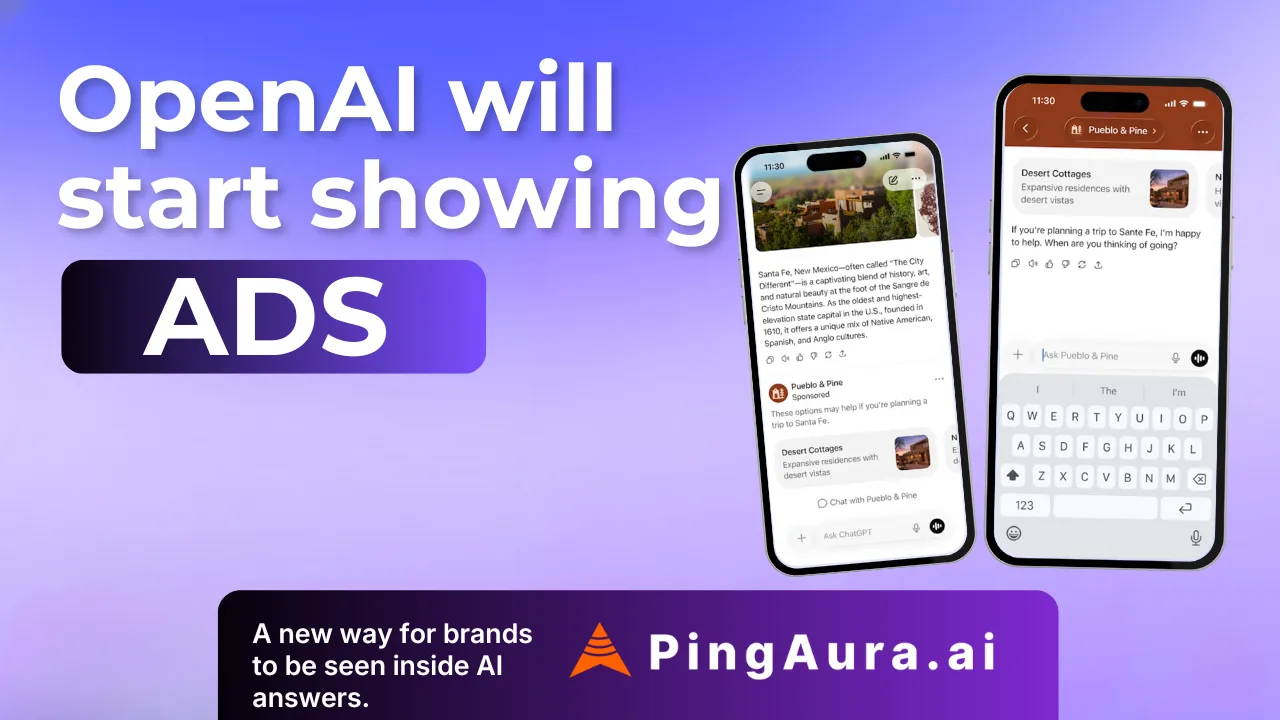
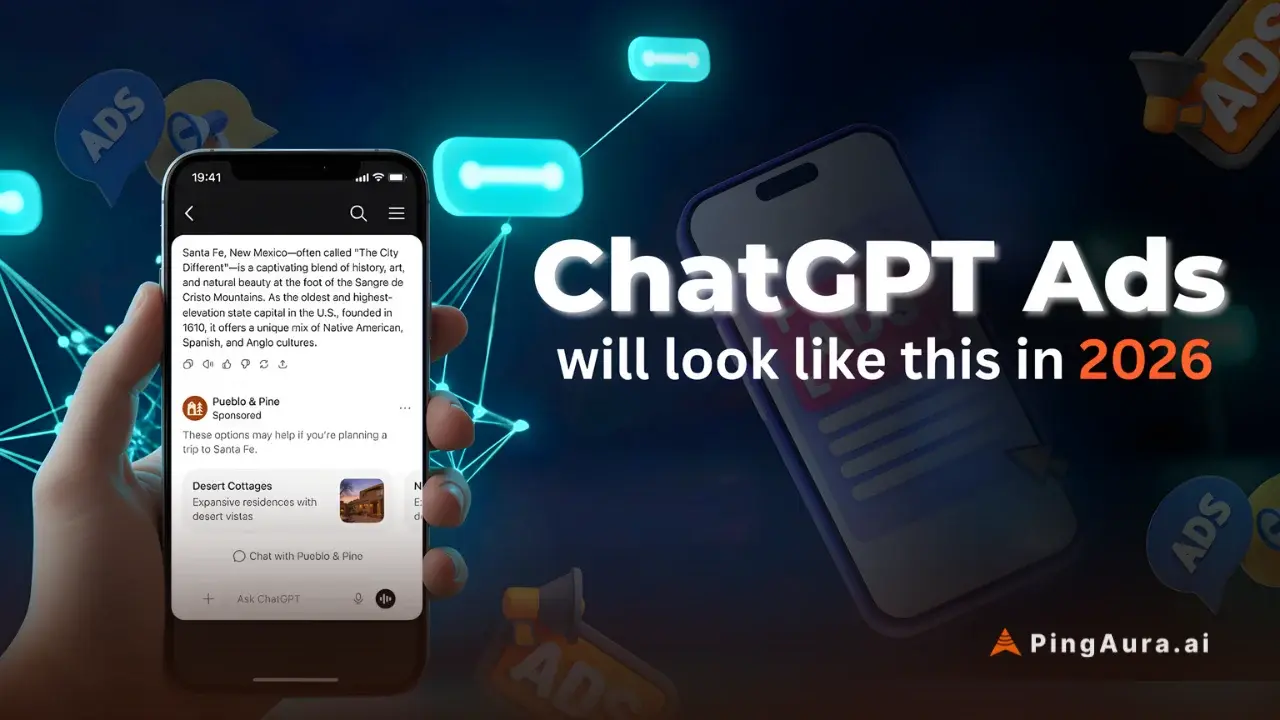
After ChatGPT answers a commercially relevant question, a small, clearly labeled sponsored section may appear below the response.
Example:
- User asks: “Best accounting software for startups in India”
- ChatGPT provides a neutral answer
- Below it: “Sponsored options you may consider”
These ads will not rewrite or bias the main response.
2. Contextual Brand Mentions
Ads will be triggered by intent, not keywords alone.
If a user is researching insurance, travel, fintech, SaaS, or products with purchase intent, relevant brands may appear as suggested options at the right moment in the conversation.
This makes ChatGPT ads closer to decision-stage placements than awareness banners.
3. Conversational Ad Extensions
Unlike static text ads, ChatGPT ads may allow follow-up questions.
A user could ask:
- “Why is this brand recommended?”
- “Is it good for my use case?”
- “Compare this with alternatives”
This means ads may evolve into interactive decision assistants, not just promotional units.
4. Strong Labeling and Trust Boundaries
OpenAI has been explicit about preserving trust.
Ads are expected to be:
- Clearly labeled as sponsored
- Separated from AI's organic answers
- Disabled for sensitive categories such as health, politics, or minors
Trust is the product. Without it, conversational AI fails.
How This Is Different From Google Search Ads
| Aspect | Google Search Ads | ChatGPT Ads |
|---|---|---|
| User behavior | Search and click | Ask and decide |
| Trigger | Keywords | Intent and context |
| Placement | Above or within results | Below or alongside answers |
| Interaction | One-way | Conversational |
| Trust model | Ad saturation accepted | Trust preservation critical |
This is not “SEO with ads.” It is AI-native discovery plus monetisation.
Why AEO Becomes Critical Before Ads
Here is the key insight many brands will miss:
Ads do not replace organic AI visibility. They amplify it.
Companies that already show up organically in ChatGPT responses will benefit disproportionately once ads arrive.
Reasons why:
1. AI Trust Compounds
If ChatGPT already references your brand organically, a sponsored placement feels natural and credible.
If it does not know or trust your brand, ads alone will struggle.
2. Lower Cost, Higher Relevance
Brands aligned with AI understanding will likely:
- Pay lower effective costs
- Convert better
- Face less friction in conversational follow-ups
This mirrors early SEO advantages from the 2000s.
3. Ads Will Likely Favor AI-Readable Brands
AI systems need structured, verifiable, and authoritative data.
Brands that invest in AEO today are effectively training the ecosystem that future ads will sit on top of.
What Is AEO and Why It Matters Now?
AEO, or AI Engine Optimisation, focuses on making brands discoverable, understandable, and referenceable inside AI systems.
This includes:
- Structuring content for AI comprehension
- Building entity authority
- Improving factual consistency across the web
- Aligning with conversational user intent
When ads arrive, AEO determines:
- Whether your brand is eligible to appear
- Whether users trust what they see
- Whether conversations convert
AEO vs Traditional SEO for ChatGPT Ads
| Factor | Traditional SEO | AEO |
|---|---|---|
| Goal | Rank pages | Be referenced by AI |
| Optimisation unit | Keywords | Entities and intent |
| Output | Clicks | Decisions |
| Role in ChatGPT ads | Indirect | Foundational |
AEO is not optional in an AI-first discovery world.
FAQs
Will ChatGPT ads affect organic answers?
No. Ads are expected to be clearly separated and will not alter how ChatGPT responds organically.
Will paid ads replace the need for AEO?
No. Ads without organic AI visibility will be weaker, more expensive, and less trusted.
Are ChatGPT ads available today?
Ads are being introduced gradually, starting with limited tiers and geographies. The infrastructure is coming before full-scale rollout.
Should brands wait until ads are officially live?
Historically, brands that prepare early win. Waiting usually means paying more later for the same visibility.
How does PingAura.ai fit into this?
PingAura helps brands measure, build, and improve their visibility inside AI systems so they are ready for both organic discovery and future AI-native ads.
Update (May 2026): this is no longer hypothetical
Since this piece was written, OpenAI has opened ChatGPT Ads to self-serve buyers and exposed an Advertiser API at api.ads.openai.com. PingAura is one of the first AI visibility platforms to connect to it natively. Paid ChatGPT performance now sits next to organic AI visibility in a single dashboard, and the AI Coworker can answer questions about it directly. Walkthrough: Introducing the OpenAI Ads Integration in PingAura.
Final Thought
ChatGPT ads will not behave like traditional digital advertising.
They will sit inside moments of thinking, comparison, and decision-making.
Brands that start their AEO journey early will not just advertise better. They will be trusted by the AI layer that now mediates discovery itself.
If search was about ranking, AI is about relevance. Ads will simply follow.