TL;DR
- OpenAI is beginning to test ads inside ChatGPT for free and Go-tier users while keeping Plus, Pro, and Enterprise ad-free.
- Ads are designed to stay separate from AI responses and are currently excluded from sensitive categories and under-18 users.
- The rollout signals the early emergence of AI-native, intent-driven advertising inside conversational interfaces.
- Privacy remains central to OpenAI's positioning, with aggregated advertiser metrics instead of access to user chats.
- For brands, this creates a new layer of AI-driven discovery, attribution, and commerce experimentation, but the ecosystem is still early and evolving.
What's happening?
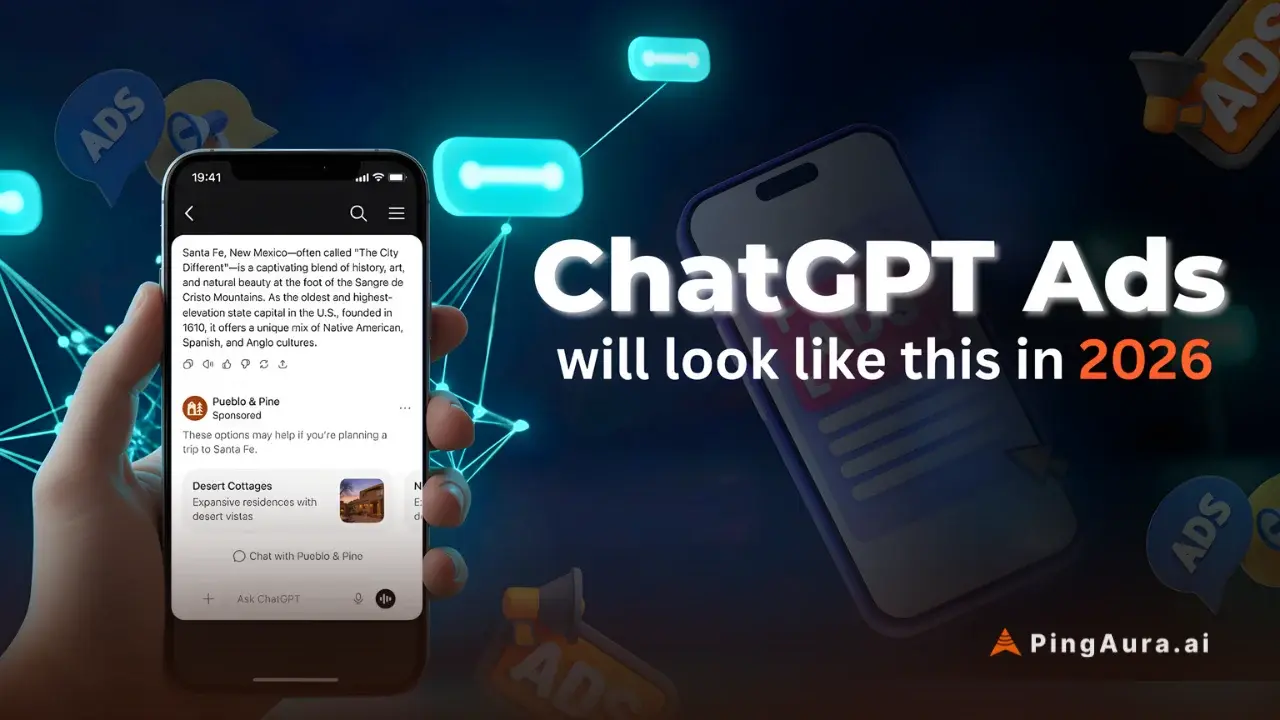
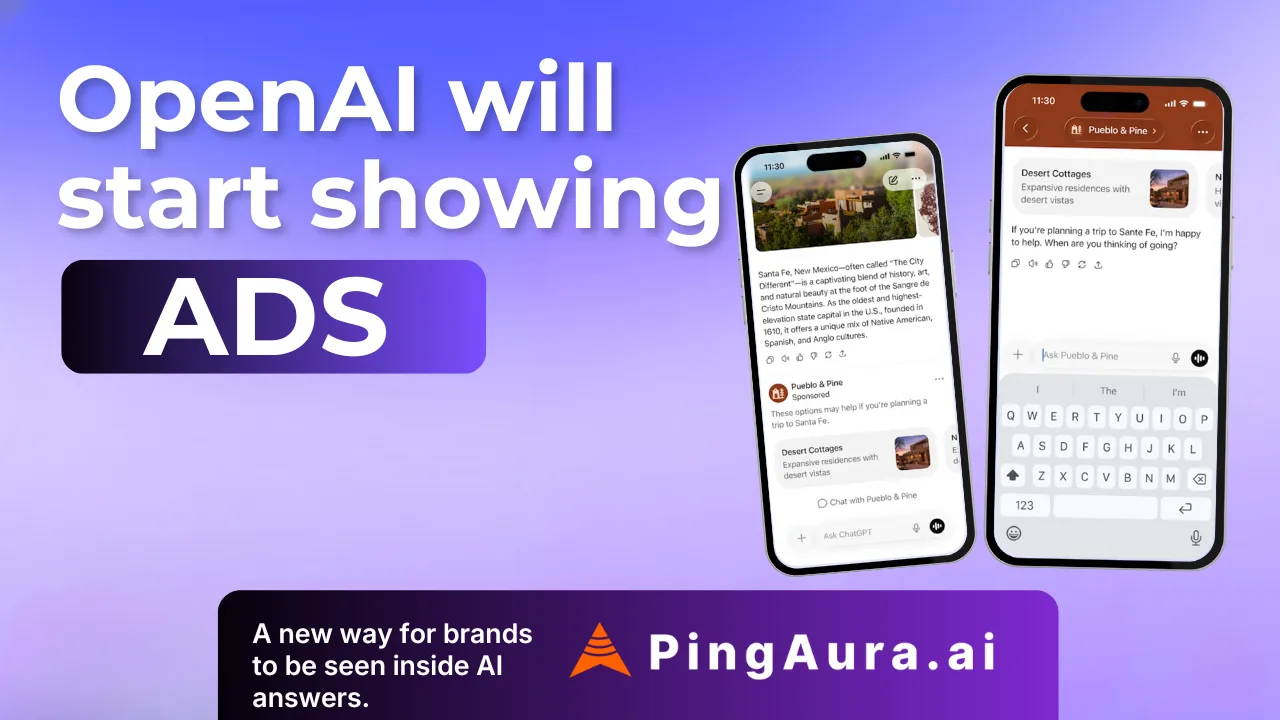
ChatGPT is beginning to test advertisements, but in a way that tries to preserve user trust, keep AI responses independent, and maintain privacy safeguards.
This is still an early-stage rollout, not a universal launch. OpenAI says ads are initially being tested primarily for logged-in adult users in the U.S. on free plans and the new ChatGPT Go tier, while Plus, Pro, and Enterprise experiences remain ad-free.
The bigger story is not simply "ads inside AI." The emergence of conversational, intent-driven discovery layers could reshape how brands think about visibility, attribution, and conversion within AI ecosystems.
7 Key Facts About ChatGPT's Ads
- Ads are currently being tested on free users and the new ChatGPT Go tier. Plus, Pro, and Enterprise users remain ad-free for now.
- Ads are designed to stay separate from AI answers. OpenAI says sponsored placements will be clearly labelled and will not influence how ChatGPT generates responses.
- The rollout focuses on relevance instead of interruption. The model is closer to contextual discovery than traditional banner advertising.
- OpenAI says user chats are not sold to advertisers. Advertisers receive aggregated campaign metrics such as impressions and clicks rather than individual conversation data.
- Users retain control over personalisation settings. OpenAI says users can manage or opt out of personalised advertising experiences.
- No ads are shown to users under 18 or near sensitive topics. This includes areas like health, mental health, politics, and other regulated or high-sensitivity categories.
- The system is still experimental and evolving. Formats, targeting models, measurement layers, and rollout scope may change significantly as OpenAI gathers feedback.
Why This Matters for Brands
ChatGPT's move toward ads creates one of the first visible monetisation pathways for turning AI-driven traffic into measurable conversion metrics for brands, but the ecosystem is still early.
What changes now is the emergence of:
- Real-time, intent-driven discovery inside AI conversations.
- Contextual placements are built around moments of product research and decision-making.
- AI-native advertising formats that sit somewhere between search, recommendation engines, and conversational commerce.
This does not mean traditional search or social advertising disappears. Google, Gemini, Perplexity, and other AI-search ecosystems are also experimenting with conversational discovery and ad experiences.
But ChatGPT's rollout is important because it combines:
- conversational intent,
- privacy-forward positioning,
- explicit safeguards around sensitive topics,
- and a clearer separation between ads and AI responses.
That combination changes how brands may begin to think about attribution, trust, and creative optimisation within AI platforms.
The Shift We Are Building For
At PingAura, we focus on helping brands optimise AI-driven discovery, campaign performance, attribution, and AI commerce as AI-native advertising systems evolve. As AI assistants increasingly become product-discovery surfaces, visibility is no longer just about rankings or impressions.
Brands now need to understand:
- how they appear inside AI-generated recommendations,
- how conversational context affects discovery,
- which prompts drive engagement,
- and how AI-assisted journeys influence downstream conversions.
That is where PingAura fits into the emerging stack: From AI-first discovery signals to campaign insights to conversion measurement, all while maintaining transparency and trust.
Our OpenAI Ads integration currently focuses on read-only insight layers from the emerging ChatGPT Ads ecosystem, including spend visibility, CTR, CPC, and creative-performance analytics surfaced inside the PingAura dashboard and AI Coworker.
Trust, Privacy, and the User Experience
AI advertising introduces new opportunities, but also new trust challenges.
Even when ads are separated from answers, users may still question:
- whether recommendations feel biased,
- whether sponsored results are overly intrusive,
- or whether AI platforms understand too much contextual intent.
OpenAI's current safeguards attempt to address these concerns through:
- clear ad labelling,
- opt-out controls,
- restrictions around sensitive categories,
- no ads for minors,
- and a stated commitment not to sell user conversations.
Whether users accept conversational advertising long-term will likely depend on how useful, transparent, and non-disruptive the experience remains.
What Brands Should Do Next
Brands should treat AI-native advertising as an emerging channel, not yet a fully mature performance platform.
The companies that move early will likely learn fastest about:
- conversational discovery behaviour,
- AI-driven attribution,
- prompt-level intent signals,
- and how an ad creative performs inside AI-assisted journeys.
The infrastructure, measurement standards, and ad formats will continue evolving rapidly. But one shift already feels clear: AI platforms are becoming discovery environments, not just productivity tools.
Conclusion
The introduction of ads into ChatGPT is not just another monetisation update. It marks the beginning of a broader shift toward AI-native discovery ecosystems where recommendations, commerce, search intent, and conversational interfaces increasingly merge into a single experience.
The advertising layer itself is still experimental. Formats will evolve. Measurement standards will mature. User expectations around trust and transparency will continue shaping how these systems develop.
But the strategic direction is becoming harder to ignore: AI platforms are evolving from productivity assistants into discovery and decision-making environments.
For brands, the opportunity is not simply about buying visibility inside ChatGPT. It is about understanding how AI systems influence:
- product discovery,
- purchase consideration,
- recommendation pathways,
- and conversion behaviour.
The companies that learn how to optimise for AI-native visibility early, while respecting user trust and contextual relevance, will likely gain an advantage as conversational commerce matures. At PingAura, we believe this is the start of a much larger transition toward measurable AI-driven discovery and monetisation.
FAQs
Which users currently see advertisements in ChatGPT?
Ads are currently being tested primarily for logged-in adult users in the U.S. on free plans and the ChatGPT Go tier. Plus, Pro, and Enterprise users remain ad-free.
Will advertisements influence ChatGPT's answers?
No. OpenAI says advertisements remain separate from AI-generated responses and are clearly labeled as sponsored placements.
Is OpenAI selling user chats to advertisers?
No. OpenAI says advertisers do not receive individual chat data or personal conversations. Advertisers receive aggregated campaign-performance metrics instead.
What does this mean for marketers and brands?
It introduces an early-stage conversational advertising channel built around intent-driven discovery inside AI interfaces.
Is this already a mature advertising ecosystem?
Not yet. The rollout is still experimental, and formats, targeting systems, and measurement standards are likely to evolve significantly over time.