TL;DR
Conversational advertising officially entered the market in 2026, but ChatGPT Ads are still in an early testing phase rather than a fully launched global advertising platform.
OpenAI is currently testing ads with logged-in adult users on Free and Go plans in the U.S., while Plus, Pro, Business, Enterprise, and Education plans remain ad-free during the rollout phase.
The current evidence does not support the idea that ChatGPT is replacing Google or Meta. Instead:
- ChatGPT is emerging as a decision-stage discovery and recommendation channel.
- Google remains dominant for high-intent search capture and bottom-funnel conversions.
- Meta continues to lead in demand generation, behavioural targeting, and scalable audience discovery.
The advertising ecosystem is becoming more complementary, not more singular. Brands that understand how these platforms work together across the customer journey will likely outperform brands optimising for only one channel.
Key Takeaways
- ChatGPT Ads are currently in limited testing and not fully rolled out globally.
- OpenAI says ads do not influence organic answers and remain visually separate.
- Google continues expanding AI-first advertising capabilities through AI Max for Search and automation.
- Meta remains dominant for scalable demand generation and behavioural advertising.
- The emerging reality is coexistence, not replacement.
- Brands increasingly need a multi-platform AI visibility and advertising strategy.
What is Changing
2026 is not the year Google and Meta are being replaced.
It is the year conversational advertising is officially entering testing at scale. With OpenAI beginning limited ChatGPT ad experiments in the U.S., marketers are now evaluating a new question: How does conversational advertising fit into the modern performance marketing stack alongside Google Search and Meta Ads?
That framing matters. The current market evidence does not support a "winner takes all" shift where ChatGPT replaces Google or Meta overnight. Instead, the advertising ecosystem is becoming more layered:
- ChatGPT is emerging as a decision-stage discovery and recommendation environment.
- Google remains the dominant high-intent search capture platform.
- Meta continues to excel at demand generation, audience expansion, and behavioural targeting.
The platforms increasingly complement each other instead of operating as direct substitutes. This article breaks down what is confirmed, what is still evolving, and how marketers should think about ChatGPT Ads vs Google Ads vs Meta Ads in 2026.
The Biggest Change in 2026: Conversational Advertising Is Real
For years, search advertising was built around keywords. Users typed:
- "best CRM software"
- "Buy running shoes"
- "email marketing tools"
Platforms returned links and ads. AI assistants change the interaction model.
Instead of searching with fragmented keywords, users increasingly ask conversational questions such as:
- "What's the best CRM for a 20-person sales team?"
- "Which laptop is best for video editing under $2,000?"
- "What's the best alternative to HubSpot for startups?"
This creates a fundamentally different advertising environment. The discovery layer becomes conversational.
That shift is why marketers are paying attention to OpenAI's early ChatGPT advertising tests. But it is important to separate confirmed facts from speculation.
What Is Actually Confirmed About ChatGPT Ads?
OpenAI officially announced that it began testing ads inside ChatGPT on February 9, 2026. However, the rollout is currently limited. As of May 2026, OpenAI is testing ChatGPT ads in a limited set of countries rather than running a full global rollout.
Countries where ChatGPT ads are currently being tested
Initial launch markets
- United States
- Canada
- Australia
- New Zealand
Newly announced expansion markets
- United Kingdom
- Mexico
- Brazil
- Japan
- South Korea
Important rollout limitations
The ads pilot is currently limited to:
- logged-in adult users
- Free and Go plans
- selected markets only
At this stage, Plus, Pro, Business, Enterprise, and Education plans remain ad-free.
What OpenAI says about the ads
OpenAI states that:
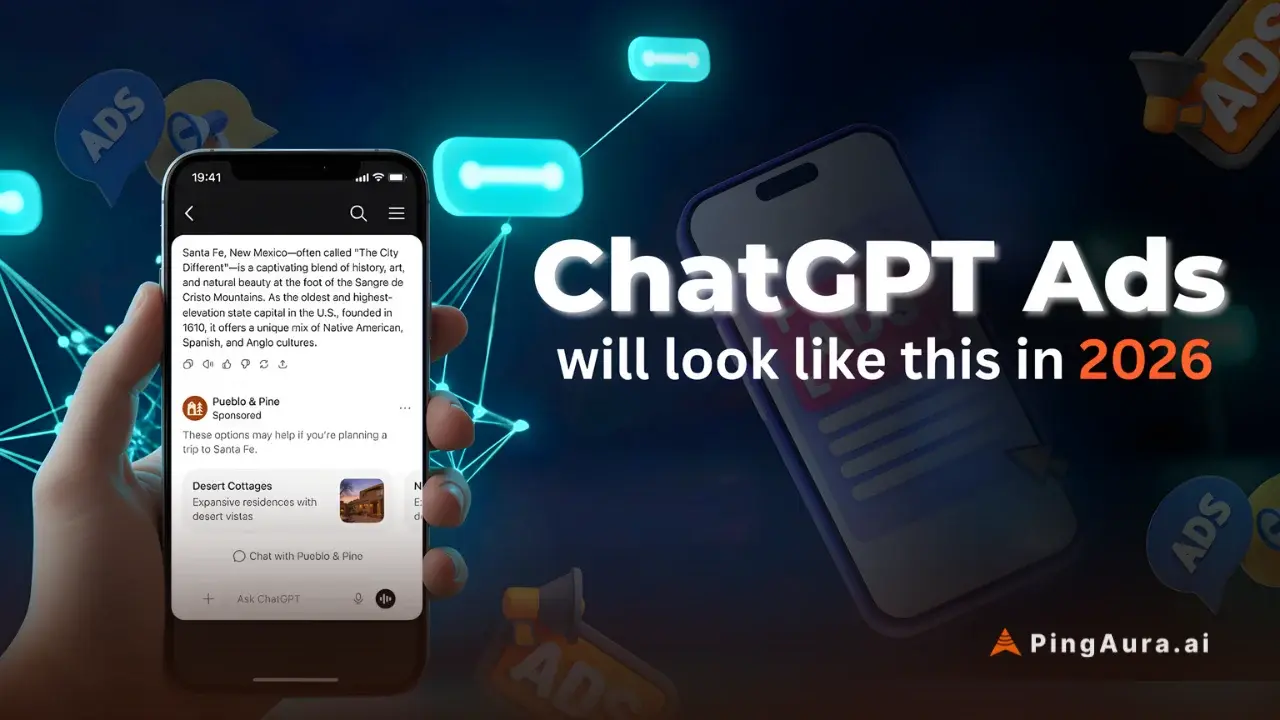
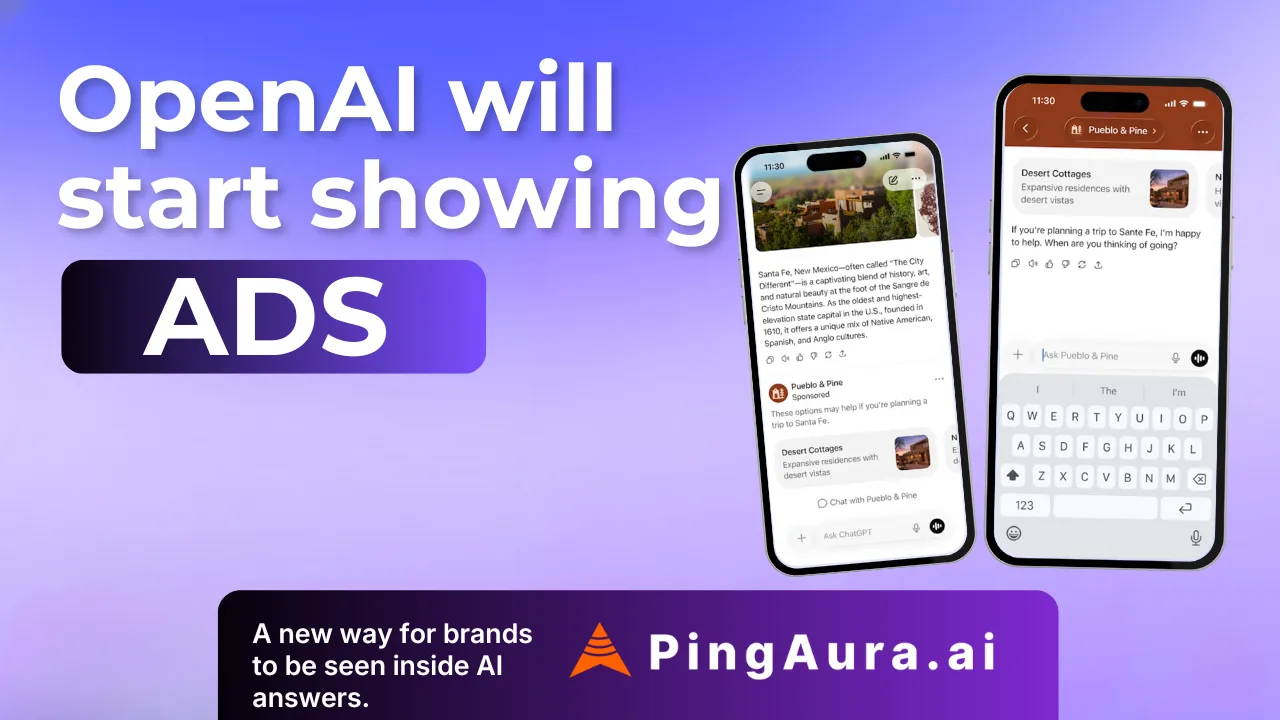
- Ads are visually separated from AI answers
- Ads do not influence responses
- Advertisers do not get access to chats or memories
- Sensitive topics like health and politics are restricted during testing
This distinction matters because many early industry articles incorrectly described ChatGPT ads as fully launched globally or implied that sponsored content could directly manipulate generated answers. That is not OpenAI's stated position. The current implementation is better understood as a controlled ad experiment within conversational interfaces.
ChatGPT
Confirmed
| Area | Latest Confirmed Status |
|---|---|
| Rollout Status | Ads are live in limited testing markets and expanding gradually |
| Current Markets | The U.S., Canada, Australia, and New Zealand are currently active rollout markets |
| Expansion Markets Announced | U.K., Brazil, Japan, South Korea, and Mexico are being added in the next rollout phase |
| Eligible Users | Logged-in adult users on Free and Go plans |
| Excluded Plans | Plus, Pro, Business, Enterprise, and Education remain ad-free |
| Ad Placement | Ads are visually separated from AI-generated answers |
| Influence on Responses | OpenAI says ads do not influence ChatGPT responses |
| Targeting Model | Contextual conversation-topic matching and interaction-based relevance |
| Advertiser Data Access | Advertisers do not get access to chats, memories, or personal conversations |
| Sensitive Topic Restrictions | Health, mental health, politics, and other sensitive categories are restricted during testing |
| Buying Infrastructure | Self-serve Ads Manager beta has begun rolling out in the U.S. |
| Advertiser Access | Still partially invitation-based, with broader onboarding gradually expanding |
| Monetization Direction | OpenAI is positioning ads as a way to subsidise lower-cost AI access |
Still Evolving / Not Fully Confirmed
| Area | Current Status |
|---|---|
| Full Global Rollout Timeline | Not officially confirmed |
| Final Long-Term Ad Formats | Still evolving |
| Mature Attribution Systems | Early-stage |
| Auction Dynamics | Not fully disclosed |
| Enterprise Measurement Standards | Still developing |
| Benchmark CPM/CPC Performance | Limited, reliable public data |
| Full API/Agency Ecosystem | Expanding but incomplete |
| Long-Term Ad Inventory Model | Not finalized |
This remains an early-stage advertising ecosystem rather than a fully mature replacement for Google Ads or Meta Ads.
The more accurate framing today is:
- ChatGPT = conversational discovery and evaluation
- Google = high-intent demand capture
- Meta = scalable demand generation and audience expansion
The market is currently moving toward platform coexistence rather than platform replacement.
How ChatGPT Advertising Actually Works
Unlike traditional keyword search advertising, ChatGPT advertising appears to rely more heavily on contextual matching.
That means ads may align with:
- The topic of the conversation
- The user's active intent
- Prior interactions within the session
- Broader conversational context
This is a major shift from classic search advertising mechanics. Instead of matching only exact search terms, conversational systems can infer intent from dialogue. For example: A user asking: "I'm looking for project management software for a remote startup team." creates a richer context than a traditional keyword like: "project management tool."
That contextual layer could eventually make conversational advertising highly valuable during the evaluation and consideration stage of the buyer journey.
However, the current ad system remains early and limited in scope.
Privacy and Safety: What OpenAI Says
Privacy concerns are one of the biggest reasons ChatGPT advertising is being watched closely.
OpenAI says advertisers do not get access to:
- Individual chats
- Chat history
- Memories
- Personal details
- Sensitive conversations
OpenAI has also said it intends to avoid sensitive and regulated topics during the testing phase, including:
- Health
- Mental health
- Politics
That creates a materially different positioning from many traditional ad platforms. Whether that privacy posture remains unchanged at scale is something the industry will continue monitoring.
But as of now, OpenAI's public messaging strongly emphasises ad separation, user privacy, and safety controls.
Google Ads in 2026: Still Extremely Powerful
| Google AI Advertising Evolution | Why It Matters |
|---|---|
| AI Max for Search | Expands reach beyond exact keyword targeting |
| Dynamic Creative Generation | Improves ad relevance at scale |
| AI-Powered Search Expansion | Captures additional commercial intent |
| Automated Optimization | Reduces manual campaign management overhead |
| AI-Assisted Audience Signals | Improves conversion prediction |
One of the biggest misconceptions in AI marketing discussions is the idea that Google Ads are becoming obsolete.
The opposite is happening.
Google is aggressively integrating AI into its advertising stack. Its focus is evolving from traditional keyword matching toward AI-assisted campaign expansion, automation, and intent prediction.
Recent developments include:
- AI Max for Search
- AI-powered creative generation
- Dynamic text customization
- Search term expansion
- Automated optimisation systems
- AI-assisted audience targeting
Google's core strength remains high-intent demand capture.
When users want to:
- compare products
- buy software
- Find local businesses
- research pricing
- evaluate vendors
Google still dominates behaviour at a massive scale. AI is not replacing Google Search. AI is changing how search intent is interpreted and monetised.
Meta Ads in 2026: Still the Best Demand Generation Machine
| Meta Strength | Strategic Advantage |
|---|---|
| Behavioral Targeting | Reaches users before active search intent exists |
| Visual Commerce | Strong for product-led and creator-led campaigns |
| Short-Form Video Distribution | Massive attention capture at scale |
| Retargeting | Excellent mid-funnel and bottom-funnel reinforcement |
| Audience Expansion | Efficient discovery of lookalike users |
Meta continues to dominate large-scale attention and behavioural advertising. Its core advantage is not search intent. It is demand creation.
Meta's systems remain exceptionally strong at:
- Audience discovery
- Behavioral targeting
- Visual commerce
- Interest expansion
- Short-form video distribution
- Retargeting
- Cross-platform consumer attention
This matters because most purchasing journeys do not begin with a search. Many begin with discovery.
A consumer sees:
- a creator video
- a carousel ad
- a product recommendation
- a lifestyle campaign
- a remarketing sequence
before they ever search on Google or ask ChatGPT for recommendations. Meta remains critical at the top and middle of the funnel.
Platform Roles in 2026
Meta
Best for:
- Demand generation
- Discovery
- Awareness
- Audience expansion
- Visual storytelling
ChatGPT
Emerging strength:
- Product evaluation
- Decision-stage recommendations
- Comparative discovery
- Conversational consideration
Best for:
- High-intent capture
- Transactional search
- Bottom-funnel conversion
- Local and commercial intent
This is not a rigid framework. All three platforms overlap. But it is a far more accurate model than assuming one platform simply replaces another.
What Is Still Speculative?
A large amount of industry commentary around ChatGPT Ads remains speculative.
That includes claims around:
- Interactive conversational ads
- Sponsored follow-up suggestions
- Embedded recommendations inside answers
- Fully personalised AI sales flows
- AI-native product placement systems
Some of these formats may emerge.
But they are not broadly confirmed production features today.
Marketers should distinguish between:
- current platform capabilities
- probable future roadmap directions
- pure speculation
That distinction is essential for strategic planning.
Why Conversational Discovery Still Matters
Even with the current limitations, conversational interfaces represent a meaningful behavioural shift.
Users increasingly prefer:
- synthesized answers
- guided recommendations
- comparative summaries
- natural language interaction
instead of manually opening multiple search results.
That changes how brands think about visibility. The question becomes: "Will AI assistants mention, recommend, or compare your brand during decision-making moments?"
This is one reason AI visibility and AI search optimisation are becoming strategic priorities. Brands are now optimising not only for search rankings, but also for AI-generated discovery environments.
The Real Strategic Shift
The real disruption is not simply "ads inside ChatGPT." The deeper shift is that:
- discovery is becoming conversational
- Recommendations are becoming AI-mediated
- Evaluation journeys are compressing
- Search behaviour is becoming more contextual
That affects:
- SEO
- paid search
- content strategy
- attribution
- brand visibility
- conversion paths
The marketing stack is expanding. Not collapsing.
Final Verdict: ChatGPT vs Google vs Meta Ads in 2026
| Platform | Best Use Case | Funnel Position | Maturity Level |
|---|---|---|---|
| ChatGPT | Conversational evaluation and recommendation discovery | Mid to lower funnel | Early-stage advertising ecosystem |
| Google Ads | Intent capture and transactional search | Lower funnel | Highly mature |
| Meta Ads | Demand generation and audience discovery | Upper to mid funnel | Highly mature |
The evidence today supports coexistence, not replacement.
ChatGPT
Conversational advertising is now real, but still early.
The platform is emerging as a new decision-stage environment where contextual recommendations may influence evaluation and consideration. However:
- rollout remains limited
- Tooling is immature
- ad formats are evolving
- Performance benchmarks are still developing
Google remains the dominant intent-capture engine. AI is strengthening Google Ads rather than making them obsolete.
Features like AI Max for Search demonstrate that Google is aggressively evolving toward AI-assisted advertising.
Meta
Meta remains one of the strongest demand-generation and behavioural advertising systems in the world. Its role in awareness, discovery, and attention capture remains critical.
Conclusion
The future of advertising is not about one platform replacing another. It is about how discovery, intent, and decision-making are being redistributed across different AI and attention environments.
ChatGPT represents the emergence of conversational discovery. Google continues to dominate high-intent commercial capture. Meta remains unmatched in scalable behavioural demand generation.
The most effective marketing strategies in 2026 will likely combine all three:
- Meta to generate attention and demand
- ChatGPT to influence evaluation and consideration
- Google to capture high-intent conversion traffic
As conversational interfaces continue evolving, brands will need to think beyond traditional SEO and paid search.
The new competitive advantage will come from understanding how AI systems surface, recommend, compare, and prioritise brands during decision-making moments. That is the real shift happening in 2026.
FAQs
Are ChatGPT Ads fully launched globally?
No. OpenAI has stated that ChatGPT Ads are currently in limited testing, initially focused on logged-in adult users in the United States on Free and Go plans.
Do ChatGPT Ads influence AI answers?
No. OpenAI says ads are visually separated from organic responses and do not influence generated answers.
Can advertisers access private ChatGPT conversations?
No. OpenAI says advertisers do not get access to chats, memories, or personal conversation history.
Is Google Ads becoming obsolete because of AI?
No. Google is aggressively integrating AI into its advertising products through systems like AI Max for Search, automation, and AI-assisted targeting.
Is Meta still important in 2026?
Yes. Meta remains one of the strongest platforms for awareness, behavioural targeting, discovery, and scalable demand generation.
Which platform is best for bottom-funnel conversions?
Google Ads remains the strongest platform for capturing explicit purchase intent and transactional search behaviour.
What is ChatGPT's biggest advertising advantage?
Its potential advantage is contextual conversational discovery during the evaluation and consideration stage of the buyer journey.
Should brands replace Google Ads with ChatGPT Ads?
Most likely no. The current market direction supports a complementary multi-platform strategy rather than direct replacement.