The car buyer is changing.
This is not just the human buyer, but the digital intermediary guiding them. AI assistants and autonomous shopping agents are beginning to compare vehicles, evaluate financing, analyse reviews, and shortlist options before a consumer even visits a dealership website.
This shift marks the beginning of agentic commerce in the automobile industry. It also exposes a structural problem. Most automotive brands are still optimised for search engines and human browsing, not for AI decision systems.
If AI agents begin influencing or completing vehicle purchases, the critical question becomes simple: Will your brand be selected, or filtered out?
What Is Agentic Commerce in the Automotive Industry?
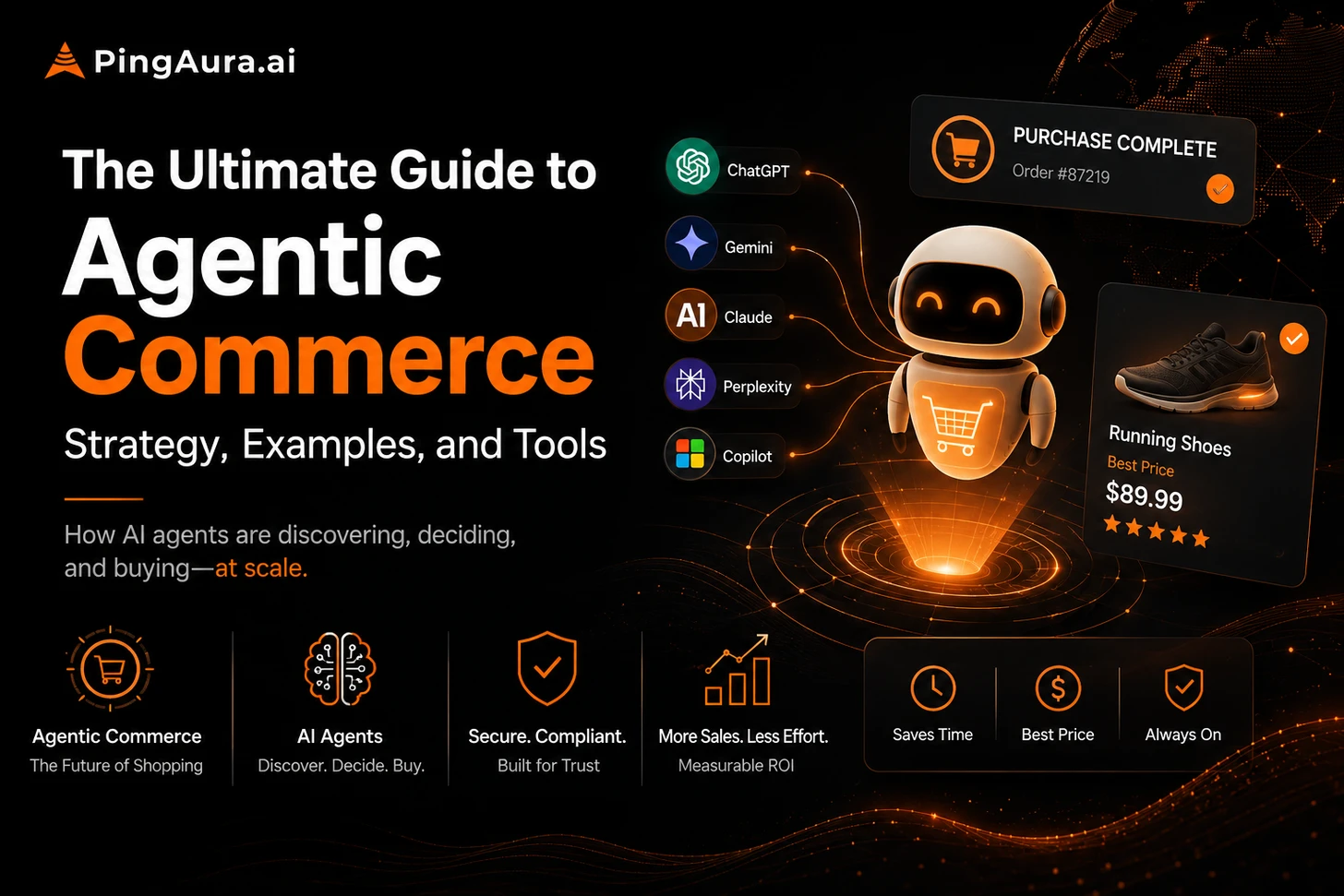
Agentic commerce refers to transactions in which AI systems act on behalf of consumers to research, compare, recommend, and, increasingly, execute purchases.
In automotive, this includes AI systems that:
- Compare vehicles across safety, price, range, and ownership cost
- Analyse real-time incentives and financing options
- Evaluate third-party reviews and sentiment
- Shortlist models based on stated preferences
- Book test drives or initiate purchase workflows
Instead of a consumer manually browsing dozens of pages, an AI agent aggregates and synthesises the information into a ranked set of recommendations. This fundamentally changes how visibility works.
How AI Agents Choose Which Cars to Recommend
AI systems do not operate like traditional search engines. They do not rank pages based on backlinks or keyword density alone. They synthesise structured signals across multiple data sources. When an AI assistant answers a question such as:
- What is the safest midsize SUV in 2026?
- What electric car has the lowest five-year cost of ownership?
- Which SUV under $50,000 is best for families?
It evaluates:
- Structured vehicle specifications
- Verified safety ratings
- Pricing clarity and transparency
- Authoritative third-party reviews
- Consistent entity recognition across the web
- Sentiment signals and comparative language
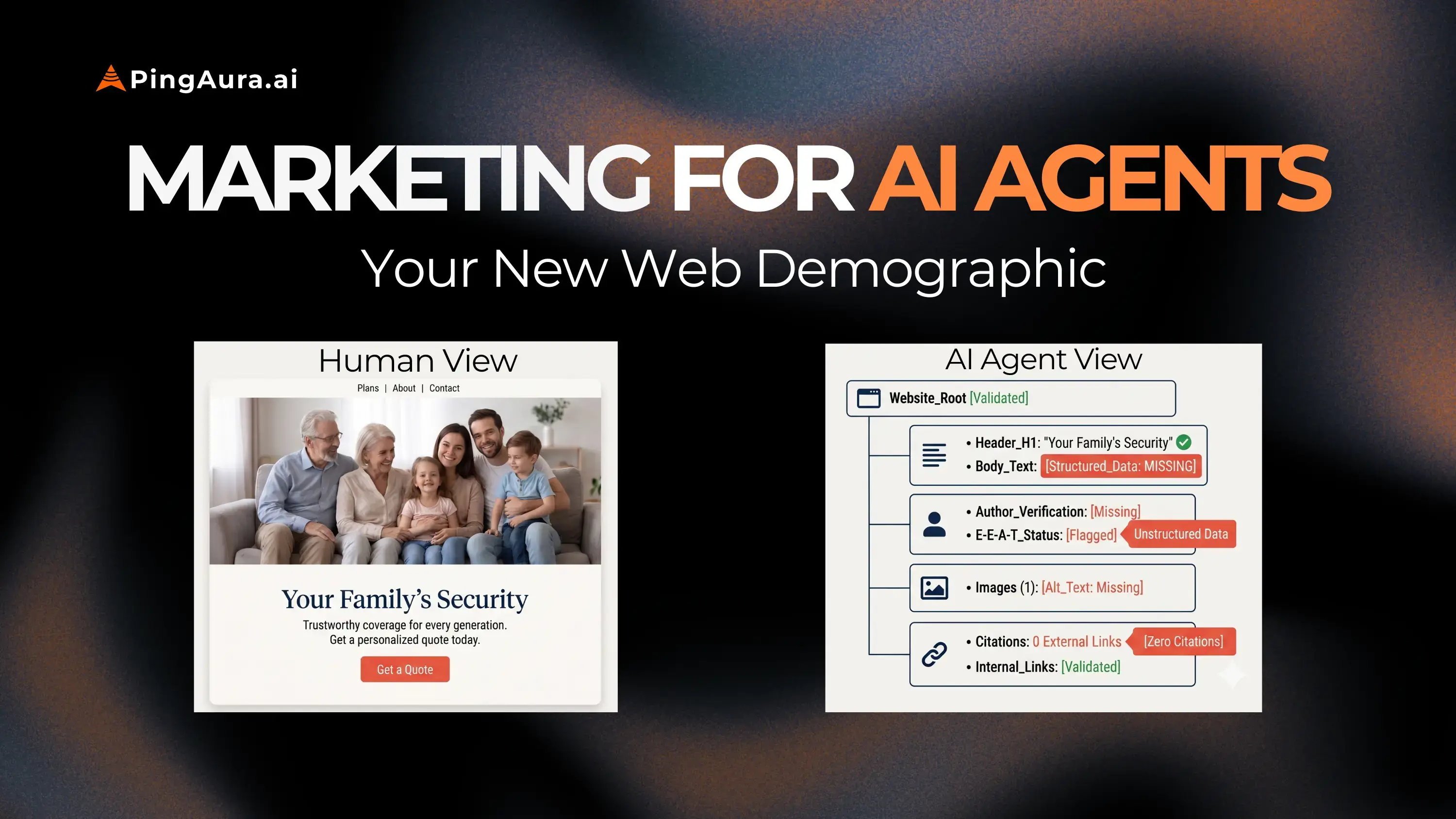
If your vehicle data is fragmented, unstructured, inconsistent, or buried in PDFs, AI systems may not confidently recommend it. This is not a traffic problem. It is a recommendation problem.
Why Most Auto Brands Are Not Ready
Most automobile brands and dealerships are still optimised for traditional SEO and paid search performance.
Common gaps include:
- Unstructured inventory data: Vehicle listings often lack machine-readable attributes that AI systems require.
- Inconsistent pricing signals: Hidden fees, unclear incentives, and fluctuating pricing reduce algorithmic trust.
- Weak entity authority: If a brand is not consistently referenced and structured across authoritative sources, AI confidence decreases.
- Limited FAQ architecture: Many automotive sites are not built around conversational query formats.
- No AI visibility tracking: Brands measure clicks and impressions, but not inclusion in AI-generated answers.
As AI-mediated shopping grows, these gaps translate directly into lost shortlist presence.
What Happens When AI Agents Control the Shortlist
In traditional search, a consumer might compare five to ten models.
In agentic commerce, an AI system may narrow the decision to two or three.
That compression has major implications:
- Fewer brands make it into consideration
- Price transparency becomes mandatory
- Data clarity outweighs brand storytelling
- Reviews and structured comparisons carry more weight
If an AI agent cannot confidently validate your warranty, safety rating, or ownership cost, it may default to competitors with clearer data.
This creates a new competitive battleground.
Not ranking. Recommendation inclusion.
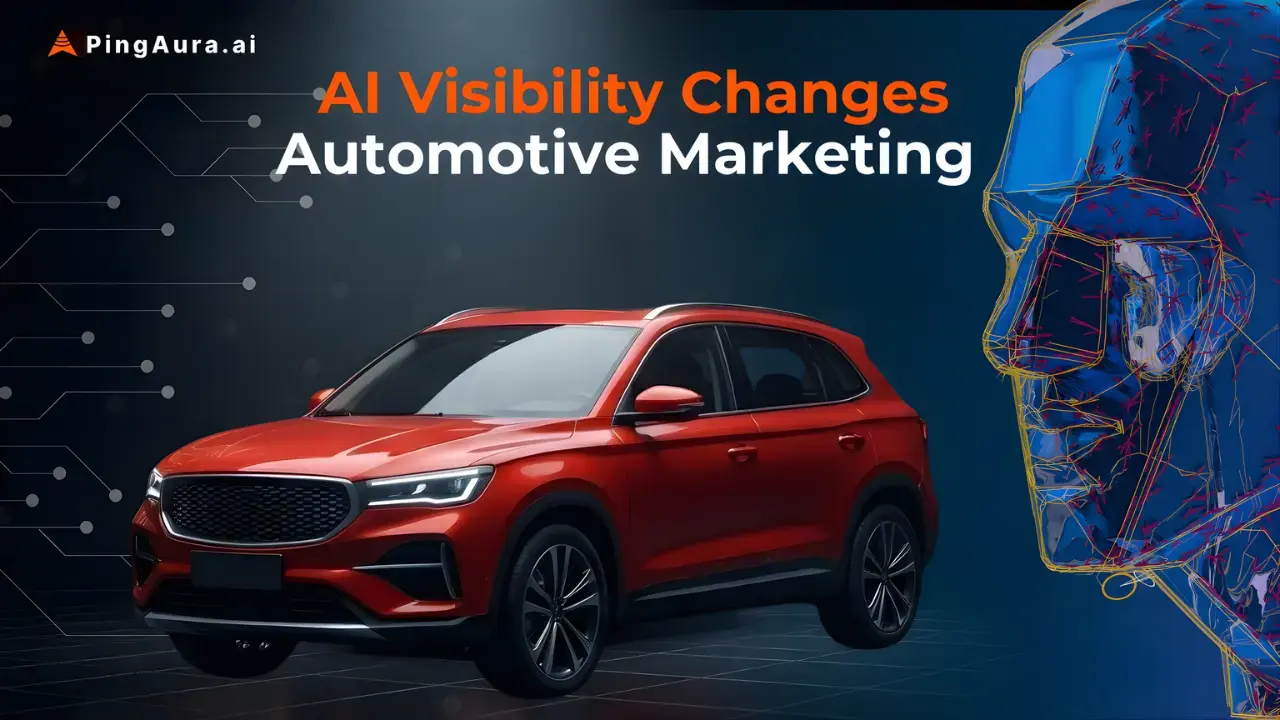
How AI Visibility Changes Automotive Marketing
AI visibility is the ability of a brand, model, or dealership to be accurately understood, referenced, and recommended by AI systems.
In the automobile industry, this requires:
- Structured vehicle schema and consistent attribute tagging
- Machine-readable pricing and incentive data
- Clear ownership cost breakdowns
- Standardised safety and performance references
- Conversational content aligned to high-intent buyer queries
- Monitoring inclusion in AI-generated summaries and answers
Visibility now extends beyond Google search results. It includes AI overviews, conversational assistants, embedded copilots, and emerging autonomous shopping agents. If your brand does not appear in those environments, the consumer may never evaluate it.
FAQs
Are AI agents already influencing car purchases?
Yes. AI systems are already shaping the discovery and comparison phases. As agent capabilities mature, they will increasingly influence negotiation and transaction workflows.
Will AI replace car dealerships?
No. Dealerships remain critical for test drives, financing, delivery, and service. However, AI may control the upstream selection process.
How can automotive brands prepare for agentic commerce?
Brands must prioritise structured data integrity, AI visibility auditing, entity authority building, and conversational content optimisation.
Is traditional SEO still relevant?
Yes, but insufficient alone. SEO drives discoverability. AI visibility determines recommendation inclusion.
The Strategic Risk for Automotive Brands
Automotive marketing historically competed for traffic. The next phase competes for algorithmic trust.
If AI systems increasingly mediate purchase decisions, then:
- Visibility becomes binary
- Shortlists become smaller
- Transparency becomes compulsory
- Attribution becomes more complex
Brands that optimise early gain compounding authority signals. Brands that delay, risk structural invisibility. This is not a future scenario. It is an accelerating shift.
How PingAura Helps Automotive Brands Win AI Visibility
If AI agents are beginning to shape the shortlist, your brand needs measurable visibility within those systems.
The question is not whether agentic commerce will impact automotive sales. The question is whether your vehicles will be part of the answer.
If you want to assess how visible your automotive brand is to AI systems today, request an AI Visibility Audit from PingAura and identify where you stand before agents control the sale. PingAura is built for the AI-mediated commerce era.
We help automotive brands:
- Audit AI visibility across answer engines and assistants
- Identify recommendation gaps and entity inconsistencies
- Optimise structured data for AI comprehension
- Track inclusion in AI-generated answers
- Prepare inventory and pricing systems for agent compatibility