AI search is no longer experimental. It has become organisational.
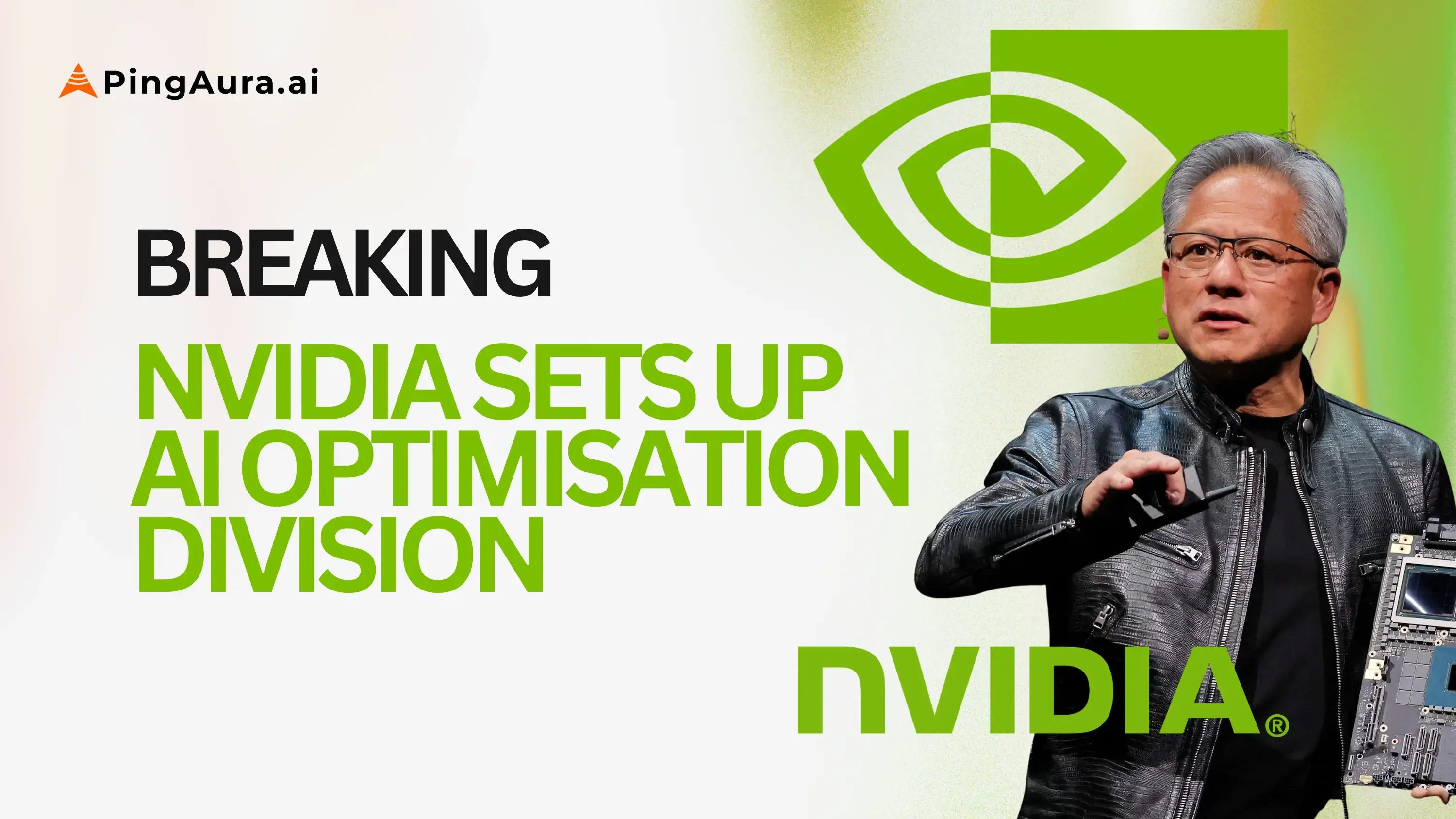
For years, AEO and GEO have been discussed as emerging concepts. What is changing now is not just how companies optimise content, but how they structure teams around search itself, and NVIDIA is one of the clearest signals of this shift.
Inside NVIDIA's Evolving Search Function
Recent public signals from NVIDIA leadership show that search is no longer treated as just SEO. According to LinkedIn insights:
- Linda Caplinger is identified as Head of Integrated Search at NVIDIA, leading across SEO, AI-driven search, and onsite search. She is an NVIDIA veteran with over 15 years with the organisation.
- Her role spans AIO (AI optimisation), SEO, and search experience, reflecting a unified approach to discovery.
This is significant. It suggests that NVIDIA is not just optimising content, but redefining search as a cross-functional capability that includes AI systems.
From SEO to AI Search
NVIDIA has also begun implementing AI Search experiences directly on its platforms, as well as all the other LLMs.
According to public event announcements:
- NVIDIA has launched generative search on its website
- It is using LLMs to automate SEO and web development workflows
This moves beyond traditional SEO into something closer to:
- AEO, where content is structured for answers
- GEO, where content is designed to be used by AI systems
SEO vs GEO vs AEO
| Feature | SEO | GEO | AEO |
|---|---|---|---|
| What It Is | Ranking pages on Google | Preparing structured content so LLMs give correct answers | Full brand optimisation inside AI engines |
| Primary Goal | Website traffic | Accurate generative answers | Visibility, accuracy, commerce & attribution |
| Optimised For | Google SERP | ChatGPT/Gemini's answer construction | ChatGPT, Perplexity, Gemini answer ecosystems |
| User Behaviour | Keyword search | Conversational query | Hyper-personalised decision journeys |
| Brand Control | Medium | Low-Medium | High (Visibility + sentiment + citations + flows) |
| Outputs | Blue links | AI-generated summaries | Ranked presence + optimised answers + agentic actions |
| Example | Google ranks your blog on "best term plan." | ChatGPT mentions your plan in the top 5 | Perplexity cites your brand #1, compares features, and launches a zero-click commerce flow |
| Success Metric | Clicks | Inclusion | Share of Voice, Visibility Score, Conversions |
| Limitations | Declining search usage | Limited brand influence | Needs structured optimisation + real-time visibility |
| Who Needs It | All websites | Brands with complex info | Every brand selling to AI-driven audiences |
How Traditional Digital Marketing Has Become AI-Driven Now
1. Integrated Search Leadership
Instead of separate teams for:
- SEO
- Paid search
- Onsite search
NVIDIA is aligning them under integrated search leadership.
This is a foundational requirement for AEO and GEO, where:
- content,
- discovery,
- and AI systems must work together.
2. AI Embedded into Search Workflows
NVIDIA is not just building AI products. It is using AI internally to:
- Improve search experiences
- Automate optimisation processes
- Enhance how content is surfaced
This aligns directly with AEO/GEO principles, where AI systems become the primary layer of discovery.
3. Shift from Keywords to Intent and Answers
As highlighted in NVIDIA leadership discussions, search is moving from keywords to intent and behavior prediction.
This is the core philosophy behind AEO:
- Do not optimise for queries
- Optimise for questions and answers
How NVIDIA's Content Strategy Supports This Shift
Beyond organisational changes, NVIDIA's content already reflects AEO and GEO best practices.
Structured, Answer-First Content
NVIDIA consistently:
- Defines concepts clearly
- Breaks down systems step by step
- Aligns content to real technical questions
This type of intent-aligned, structured content performs better in AI-driven search environments.
High Authority Across Ecosystems
NVIDIA strengthens its visibility through:
- Developer ecosystems
- Research contributions
- Industry partnerships
This increases the likelihood of being selected as a source in AI-generated answers.
Content Built for Machines and Humans
NVIDIA's documentation is:
- Modular
- Consistent
- Context-rich
This makes it easier for AI systems to:
- Interpret
- Extract
- Reuse in generated responses
What This Means: The Rise of the AEO/GEO Team
NVIDIA is not alone, but it is early.
What we are seeing is the emergence of a new model:
The Traditional Model
- SEO team
- Content team
- Paid search team
The Emerging Model
- Integrated search team
- AI-powered optimisation workflows
- Content designed for both humans and machines
This is effectively what an AEO/GEO team looks like in practice.
Why This Matters for Enterprises
The implication is clear:
- AI systems are becoming the primary interface for discovery
- Content is being consumed without clicks
- Visibility depends on being included in answers, not rankings
Companies that do not adapt will face:
- Reduced organic traffic
- Lower brand visibility
- Loss of influence in decision-making journeys
FAQs
What is the biggest signal from NVIDIA's strategy?
Search is no longer just SEO. It is becoming an AI-driven, cross-functional capability.
Why is this important now?
Because AI systems are rapidly becoming the default way users discover information.
What should companies do next?
- Break down silos between search and content
- Start structuring content for answers
- Invest in AI-aware discovery strategies
Conclusion
NVIDIA is a global leader in AI computing. They have recognised this shift in search and are already implementing strategies for it. This investment is not just adapting to the future of search; it is quietly building the team structure that defines it.
The shift to AEO and GEO is no longer theoretical. It is already happening within some of the most advanced companies in the world.
And increasingly, the question is not: "Do you have an AEO strategy?" It is: "Is your organisation built for how search now works?"
How PingAura Helps Teams With AI Optimisation
PingAura is a platform built for this exact shift.
It helps organisations:
- Visibility Across AI Platforms: Understand where your brand appears in AI-generated answers.
- AEO Optimisation: Restructure content into clear, answer-first formats aligned with real benchmarks.
- GEO Readiness: Improve semantic clarity and entity positioning to increase citation likelihood.
- Attribution: Measure how AI visibility contributes to pipeline and revenue.
- Agentic Search Preparation: Prepare for a future where AI systems actively guide user decisions.
In a world where AI decides what gets surfaced, PingAura ensures your brand is:
- Discoverable
- Understandable
- Selected
Sign up at PingAura.ai today to optimise for this very shift and be seen and cited in AI answers. Let's monetise AI together!