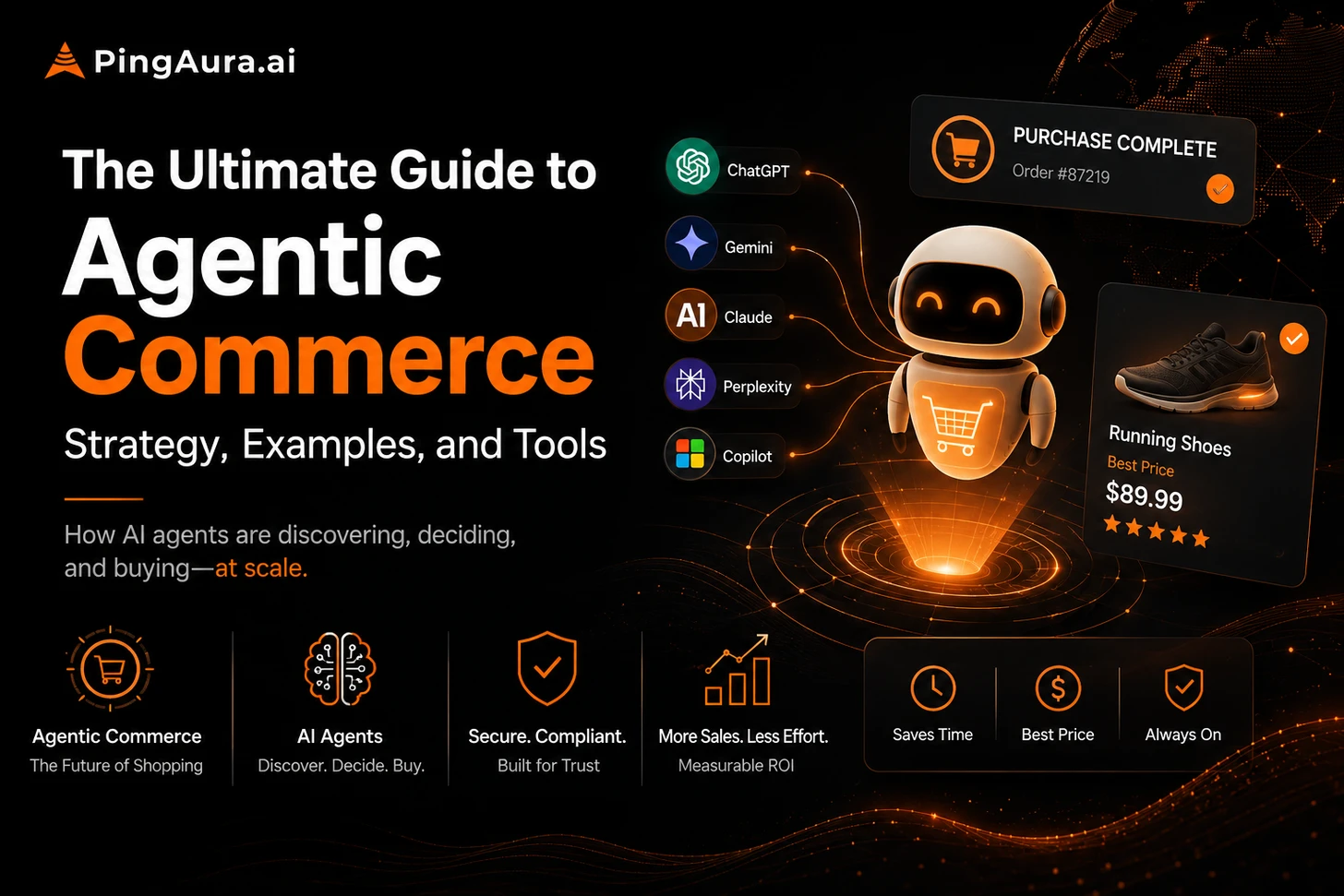
Agentic Commerce is changing how people buy, and leaders have to adapt now to protect sales and grow their brands.
In 2026, your most valuable store visitor may not have a heartbeat. It may be an AI agent with a budget and a fast API. This is the shift to automated shopping, and you already see Agentic Commerce examples every day as bots make buying choices. Firms that act now win a share of a five trillion dollar global market while traditional search fades.
Your business has to learn how to sell to these new AI buyers. You need the right tools and a solid plan. Here is how to win in this new era.
What is Agentic Commerce and why does it matter in 2026?
Agentic Commerce is a new way to shop online. In this model, AI agents help plan, check, and often place orders for us. Classic online shops are built for people to click and browse; Agentic Commerce shifts more of that work to software. In 2026 this matters because AI now helps with more steps in the buy path. Agents scan offers, track stock, and flag key terms in real time. Many Agentic Commerce examples start with price and feature checks done by bots, and in some flows the bot even lines up the cart for fast human approval.
How does Agentic Commerce differ from traditional e-commerce?
Traditional online shopping depends on people to drive each step. They type a search, click links, and weigh each choice, and they care about brand look and feel. AI agents care about clear facts and rules: they scan data, read terms, and test options at scale. The main shift is that the buyer role moves from a person to a system that acts for that person.
- Humans: look at brand style and take time.
- Agents: read clean data and act in seconds.
Why is 2026 the breakout year for autonomous shopping?
In 2026, AI tools are built into more shop flows. People can chat with an agent and move from search to order in one stream. New Agentic Commerce tools help brands shape data for these agents: they clean feeds, map traits, and fix gaps in product info, which makes it easier for agents to trust and rank your offers. A strong Agentic Commerce strategy starts with that data layer, and brands that invest there now gain more share as agent-led spend grows.
What are real-world Agentic Commerce examples?
Real-world Agentic Commerce examples now show up in many markets. They touch both people who shop at home and teams who buy for work. Smart bots can guide and trigger large flows of orders, which changes how brands sell online and opens fresh ways to grow share and keep users loyal.
How are consumer-facing AI agents executing zero-click shopping?
In many homes, AI agents now shape the full path to a buy. A user asks a chat tool what to get and why; the agent searches, weighs options, and drafts a cart. In some flows the user taps once to confirm; in others they set clear rules in advance and the agent runs the buy when those rules are met. These flows cut out long site visits and forms. They draw on clean product feeds and clear stock data, and they link to safe ways to pay. To win these sales, brands must plan for bots, not just people. PingAura helps you win this new space by making sure Agentic Commerce tools can read and rank your items.
How is B2B procurement leveraging autonomous agents?
B2B teams also test and roll out agent-led flows. Supply and ops teams use bots to track stock and usage rates, and when levels drop, agents can draft or place new orders under set rules. These flows still keep clear logs for audit and risk teams, which keeps each trade safe and easy to check. The gain is less time on low-value tasks and clicks, so large firms save meaningfully over time.
How to build a winning Agentic Commerce strategy?
A strong Agentic Commerce strategy helps AI agents find your brand. In 2026, search keeps shifting fast and old playbooks age out as AI tools rise. Brands now need content that works well for these agents so more bots list and rank their goods. To stand out, make your store clear and easy to scan. Many early Agentic Commerce examples point to one theme: agents do best with clean, fast, and steady data. You also need Agentic Commerce tools that help you grow with less work. PingAura offers tools built for growth teams, which can drive real share gains, help agents act in seconds once users ask, and cut friction for the end buyer.
Key steps to start:
- Share real-time feeds by API.
- Use clear schema markup.
- Keep price and stock rules tight.
How should enterprises optimise their data for machine-readability?
AI agents do not like doubt or gaps. If ship times or return rules seem vague, they may move on. Firms should share high-detail, near real-time API feeds and use clear product fields and schema markup for all key data, so stock and terms are easy for agents to read. Strong data quality is a key way to close more sales: it helps agents rely on your stock and price data, which lifts buy rates. PingAura gives teams ready data and feed templates.
How do regional payment and regulatory landscapes impact your strategy?
Global brands must adapt to local rules and payment habits.
- In each region, track key data and privacy laws.
- Match local payment tools that buyers know and trust.
- Plan for cash-free and phone-based pay where that is common.
- Add clear logs, spend caps, and controls where rules require them.
This builds trust with users and with agents.
Which Agentic Commerce tools and platforms drive enterprise ROI?
The tools you pick shape your growth path. The right Agentic Commerce tools lift sales, raise conversion, and grow long-term value by linking your catalog and price data to the AI agents that help people buy. That link grows more important each year and helps you move faster than slower rivals.
To build a strong Agentic Commerce strategy, look for tools that offer:
- Real-time data feeds.
- Clear tracking and reports.
- Fast, simple setup.
These tools help AI agents see and act on your offers. Many Agentic Commerce examples point to one theme: brands that share clean, fresh data win more intent. When your stock and price data is clear, agents can act with less risk. The right stack cuts guesswork and slow manual tasks, so your team shifts from one-off tweaks to broad Agentic Commerce reach.
How does PingAura compare to developer-focused agent infrastructure?
Many tools aim only at dev teams. Some give raw APIs with little help for growth; others give flows for tasks like research, not day-to-day trade. They can be strong for code teams, yet hard for growth leads. PingAura is built for marketing and growth teams: it gives clear paths and playbooks to grow reach in agent flows, which keeps teams close to real demand and near-term ROI.
What features should you look for in a marketer-friendly agentic platform?
Look for three core traits: no-code setup, built-in links, and quick tests. Founders should also ask for clear, fair reports so they can see how agents drive key events. Good data helps you tune bids, feeds, and stock, which helps your brand stand out as Agentic Commerce grows.
FAQs
What is the Agentic Commerce Protocol?
The Agentic Commerce Protocol is an open standard built by Stripe and other firms. It helps AI agents talk to shop checkouts so automated buying is safe, letting agents purchase items for you with ease.
How does Agentic Commerce affect SEO?
It shifts your focus away from search-page ranks toward optimising your data feeds. AI agents and LLMs need clear product details, so use clean code and strong brand signals to help agents find and buy your items.
Are AI agents secure for payments?
Yes. Modern tools use safe payment setups that keep card details secure with tokens. You can set clear spending limits and use quick checks to approve buys, which keeps your money safe from fraud.
What is the difference between a chatbot and an AI commerce agent?
A chatbot helps you find things: it answers questions and gives tips. An AI commerce agent is autonomous: it can plan, compare prices, and buy items for you, doing the actual work on its own.
Conclusion
Agentic Commerce is changing how we buy. Soon, AI agents will handle much of our shopping, and they do not look at pretty pages, they look for clean data and fast speed. Winning in 2026 means optimising for both human persuasion and machine execution.
Audit your data setups today, make your product feeds clear, and deploy tools that capture early share. Platforms like PingAura help you get seen by these agents and turn that visibility into sales. Do not wait. Start making your store ready for automated buying today.